Laura’s story: How I finally put an end to self-blame during perimenopause

Laura struggled with exhausting self-blame during her perimenopausal journey — until attending a MenoMinds workshop, which shifted her perspective and brought long-awaited relief.
Key takeaways:
Laura, 44, found relief from self-blame during perimenopause at the Mental Health in Menopause Workshop.
This isn’t a theoretical piece; it’s Laura’s real story.
MenoMinds provides free, expert-led, relaxed sessions with practical strategies, Q&A, and peer support.
All attendees receive a resource pack and exclusive access to the Academy for future wellbeing webinars.
The workshop is designed for self-employed women or those in micro-businesses (<250 employees).
Sign up to gain understanding, practical tools, and a supportive community without pressure to share.
Laura had spent months feeling frustrated, exhausted, and guilty… Convinced that she was somehow failing at work, life, and everything in between. Her focus slipped, her energy drained, and the little voice of self-blame never left her side.
This article shares Laura’s story: how she finally stopped blaming herself, began to understand what was really happening in her body and mind, and discovered practical support that actually works.
Through her experience, you’ll see what perimenopause can look like, why these feelings are completely normal, and where to find free strategies, guidance, and a supportive community to help you feel in control again.
Jump to a section that interests you:
Laura’s story: Breaking free from self-blame
Laura had just spent the morning staring at her laptop, frustrated that she couldn’t focus again. “Why can’t I do this like I used to?” she thought.
For months, these creeping thoughts had been her constant companion, along with feelings of guilt and self-blame that no one seemed to talk about, or at least, she didn’t think anyone did.
Her experience reflects a reality many women face during perimenopause: confusion, self-blame, and the sense that something is “wrong” with them. Some days can feel overwhelming and exhausting, and trying to maintain work commitments, meet deadlines, and function at your usual level often intensifies these feelings.
It’s not always the big moments of guilt, either; it’s the little self-blame thoughts that creep in:
“Why can’t I focus like I used to?”
“I shouldn’t be this tired.”
“Am I failing at work or life?”
“They seem to be handling this much better than I am.”
Sound familiar? If you can relate to Laura, you’re not alone. 38% of women experiencing perimenopause report symptoms of depression, including irritability, mood swings, and fatigue. These challenges are common, but without guidance and support, they can fuel a cycle of self-blame and isolation.
Like many women, Laura tried to push through the fatigue, brain fog, and mood swings, believing she was somehow failing — until she attended the Mental Health in Menopause Workshop. For Laura, the workshop was a turning point. The session provided language, understanding, and reassurance, helping her recognise that what she was experiencing was normal and manageable.
By the middle of the session, Laura felt a wave of realisation that everything she had been feeling finally made sense: “Halfway through the session, I felt this wave of realisation. Haley described symptoms of perimenopause, and it was like she was describing my life. I suddenly had language for what I'd been feeling, and it was such a relief. I left the session feeling lighter. Nothing had changed physically, but mentally, everything shifted. I stopped blaming myself. I realised I wasn't failing, I was going through something normal that no one talks about.” - Laura, 44
Understanding perimenopause and mental health
Perimenopause is the transitional phase leading up to menopause, usually starting in your early to mid-40s, though it can begin earlier or later depending on genetics, surgery, or medical treatment.
During perimenopause, levels of oestrogen and progesterone fluctuate, sometimes dramatically, which can affect both body and mind. This is why symptoms can appear long before your final period, and why these changes can feel confusing, overwhelming, and isolating. These symptoms can last a decade or more.
Often when people talk about “going through the menopause,” they’re actually referring to perimenopause. During this phase, hormone levels shift, and the ovaries gradually produce fewer eggs. Once you haven’t had a period for 12 months or more, you’ve officially reached menopause.
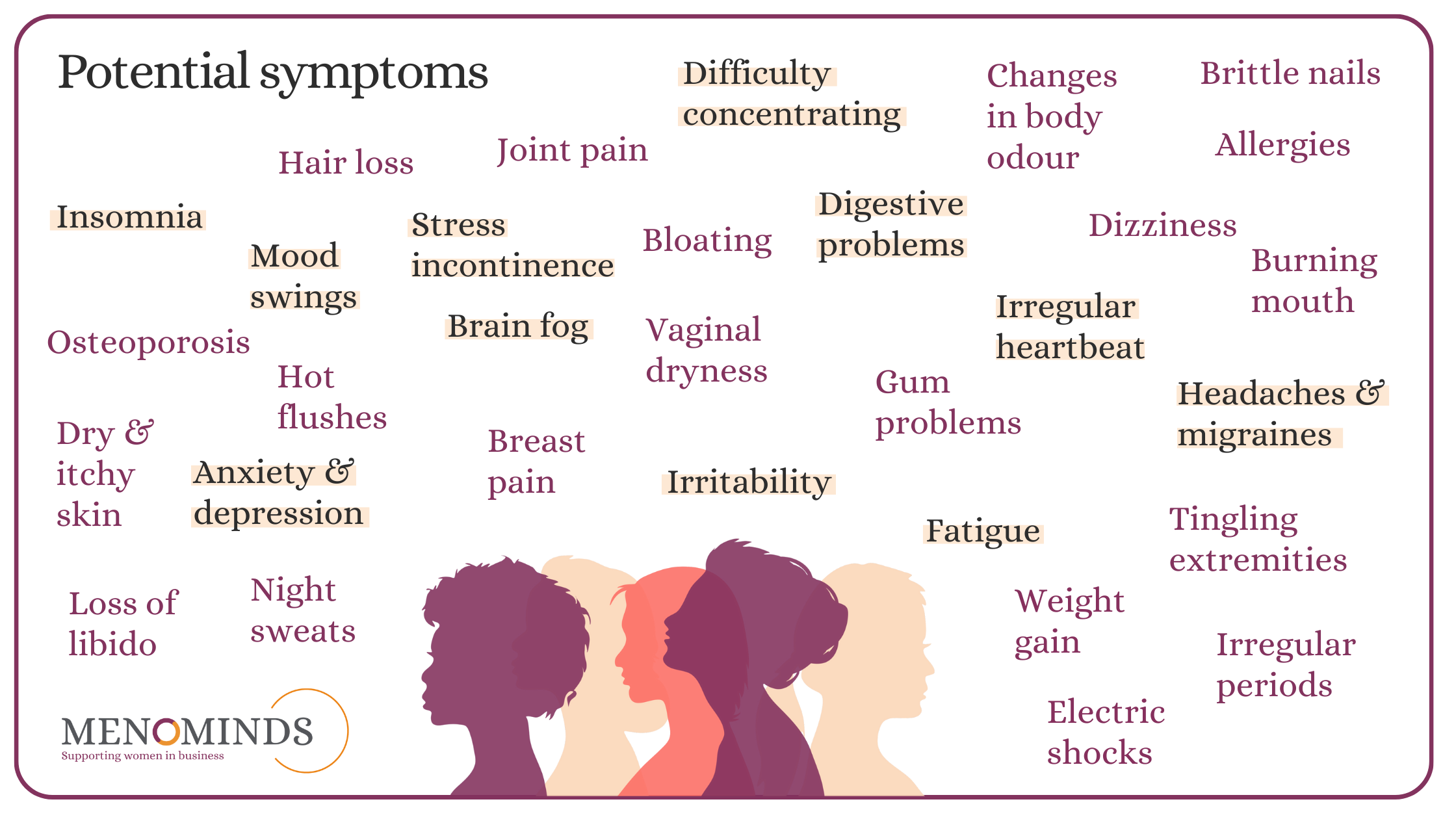
For women running their own businesses or working in small teams, these changes can feel especially challenging. Without clear language or support, it’s easy to misinterpret symptoms as personal failings rather than a natural and common phase of life.
Understanding perimenopause isn’t just about recognising physical changes; it’s also about acknowledging the mental and emotional impact, and knowing that support, guidance, and strategies exist to navigate this stage with confidence.
The Mental Health in Menopause Workshop
The Mental Health in Menopause Workshop fills a critical gap in support for women navigating perimenopause. Led by menopause specialist Haley White and workplace mental health expert Victoria Brookbank, the session offers:
Practical, realistic strategies for managing mental health during perimenopause
A safe, supportive space to listen or engage as you feel comfortable
Expert insights on the impact of menopause symptoms at work
Confidentiality and a relaxed, no-pressure environment
Real-life experiences of how women have navigated this transition
Tried-and-tested ways to redesign routines and boundaries for greater balance
If you are juggling work, clients, self-employment, or business leadership without internal wellbeing support, this workshop is for you.
Laura describes the atmosphere as: “Relaxed and supportive, where there’s no pressure to share. You can listen, take breaks, and engage in a way that works for you.” - Laura, 44
What you’ll gain
Attendees receive:
Expert guidance and Q&A: opportunity to ask questions or simply observe and learn
Resource pack: access to a digital pack of practical tools to use after the session
Exclusive Academy access: a library of wellbeing webinars, commencing spring 2026
Peer support: connection with other women navigating similar challenges
Free training: this session would usually cost over £400, but it’s offered for free
The workshop is fully funded and free of charge. Each place is extremely valuable, so attendees are encouraged to sign up only if they can participate on the day. To maintain confidentiality, the workshop is not recorded.
Who it’s for
Self-employed women, freelancers, or those running and working in small businesses (up to 250 employees)
Anyone navigating perimenopause or menopause
Women experiencing changes in mood, sleep, confidence, or concentration
Those who want practical, research-led strategies to feel calmer and more in control
Women working in small charities or non-profit organisations
Please contact us if you are a local council, a larger charity, or work for the NHS or blue light services (ambulance, fire, police) to request access.
You don’t need any prior knowledge, just curiosity and an open mind.
Why this matters
Many women suffer silently through perimenopause. Stories like Laura’s show the power of education, expert guidance, and peer support.
When women understand their symptoms and feel heard and validated, they can:
Minimise self-blame and shame, and take back control over thoughts, feelings, and emotions
Gain practical, realistic coping strategies to operate at a pace and level that works
Improve mental wellbeing at work and home, boosting focus and productivity
Feel supported through ongoing guidance, resources, and expert advice
Create valuable connections in their community and feel less alone
Learn the language to communicate needs and set boundaries clearly
Build confidence to redesign routines, habits, and self-care for greater balance
Get your free perimenopause guidance and peer support
Ready to take the next step? Sign up for the next free Mental Health in Menopause Workshop to access expert guidance, peer support, practical strategies, and exclusive resources to navigate perimenopause with confidence. Explore our events page to sign up for upcoming sessions.
If you think someone you know could benefit, please share this article. Knowledge shared is a powerful act of kindness — you never know who might need this resource right now.
Important Note:
We are not clinicians and cannot diagnose depression or other mental health conditions. If you’re having thoughts of harming yourself, or you feel like you can’t keep yourself safe, seek urgent help. Contact NHS urgent services, your GP, or a crisis service such as SHOUT (text 85258 in the UK). If you’re in immediate danger, call 999.